
A landmark year for Cromer Pier
19th May 2026
Cromer Pier © Will Jarvis
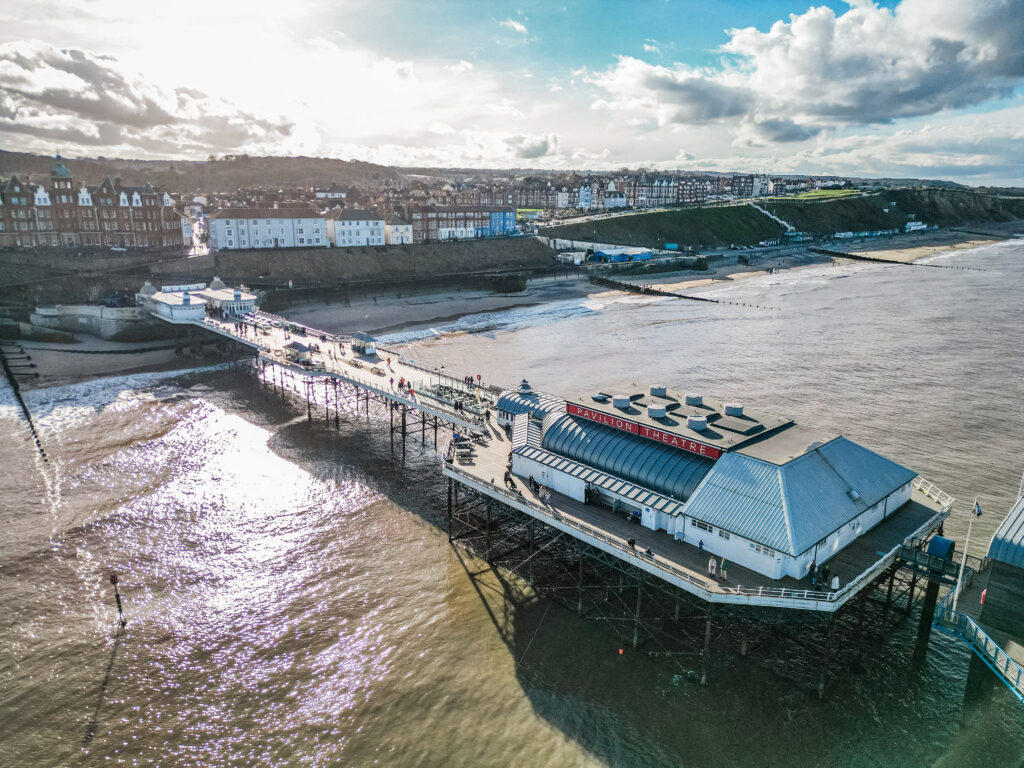
Now is the perfect time to celebrate the wonders of Cromer Pier! This marvel of elegant engineering, which allows people to walk over the choppy waters of the North Sea, is 125 years old this year. Caroline McGhie finds out more
One of the last surviving fully-functioning piers, this seaside antique is worthy of all the love and attention we can lavish on it. The 500ft structure has survived multiple storms and disasters since it opened in 1901. That was the year of Queen Victoria’s death, a time when Britain still had an empire, a time before computers and air travel, the point at which Winston Churchill arrived on the political scene and made his maiden speech in the House of Commons on the subject of the Boer War. While the world has changed out of all recognition since then, the pier still rules the waves on the Cromer seafront.
Designed by Douglass and Arnott in 1900, it was built at a cost £17,000 (possibly more than £2m in today’s money) extending 500ft into the North Sea with glass shelters and a bandstand on the end. A few years later the bandstand was roofed over to make a pavilion, then came the stage.
Now it is listed Grade II, one of only 55 piers left on Britain’s coast and it has been made Pier Of The Year three times (2000, 2015 and 2024), by the National Piers Society, which was started by Sir John Betjeman in 1979 and now has Dame Joan Bakewell and Gyles Brandreth as patrons. The society praised it for its resilience and ‘complete absence of any amusement machines or other modern artefacts’.
It is sobering to remember how modest its beginnings were. In 1391 it was no more than a rickety wooden jetty, built so that produce from Norfolk could be loaded onto boats and traded in other parts of the country. More than two centuries later, the jetty is mentioned in a letter sent by Queen Elizabeth, giving Cromer written permission to sell wheat, barley and malt and spend the profits on the upkeep of the jetty and town. North Sea tides and weather raged as ferociously as only they know how, which meant the structure had to be constantly repaired and rebuilt. It wasn’t until 1901 that the pier we know and love was opened.
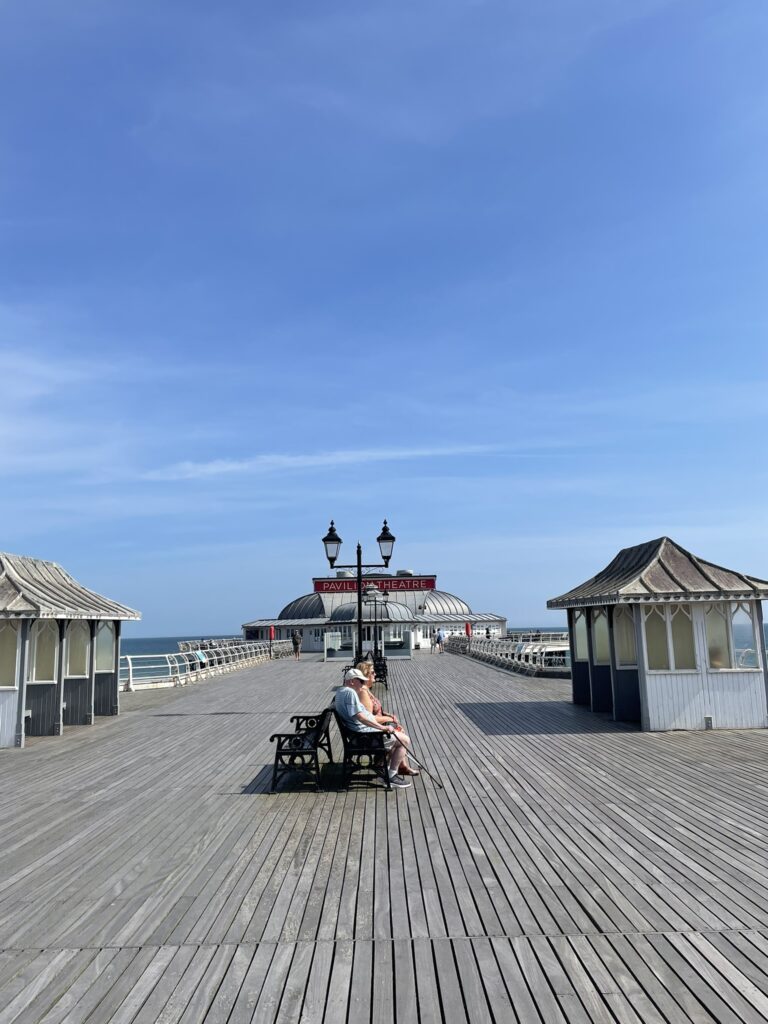
There are few activities more enjoyable than walking along the pier to admire the views and watch fishermen angling for mackerel and bass, or families crabbing in the summer. Step on it in winter and you have the thrill of feeling the wild sea beneath your feet. Small wonder, then, that the structure needs large amounts of investment to keep it upright. In 1993, a 100-ton rig crashed over it, cutting it in half and leaving the lifeboat station and Pavilion Theatre isolated on the seaward end. Since then, there has been a constant programme of reconstruction and maintenance.
Good intentions are, however, constantly undermined by the weather. In 2012 North Norfolk District Council launched a multi-million-pound effort to strengthen the structure, sending a six-strong team of abseilers to swing along the underside and deep-sea divers round the legs and pilings as well as replacing the decking. Almost as soon as this was finished, the 2013 tidal surge left six people marooned on the end.
The pier attracts thousands of pleasure lovers each year, offering them a dramatic view of the town itself, the brightly coloured seafront houses and the Hotel de Paris. But it is also where thousands flock every summer to the Pavilion Theatre to see the only full-season end-of-the-pier show in the country, lauded for its West End quality singing, dancing, comedy and for upholding the traditions of old-fashioned variety show, complete with innuendo and magic tricks. ‘The theatre is the heartbeat of the pier and the pier is the heartbeat of Cromer,’ says Sean Garrett, general manager.
‘Cromer Pier has been really treasured… It makes an unbelievably precious contribution in the town. If it weren’t here Cromer would be a different place.’
Alex Chandler, communications chief, North Norfolk District Council
Beyond the theatre is Cromer Lifeboat Station, which has saved hundreds of lives over the years. The RNLI station started life on the East Beach, moved to the pier in 1923 and was rebuilt in the late 1990s. These days it operates a Tamar and D class lifeboat and celebrates the history of Cromer’s most famous lifeboatman Henry Blogg, who volunteered in 1894, saving 873 lives during his 53 years of service with the help of his crew (this all in spite of the fact that he couldn’t swim).
Let the 125th celebrations begin. A big party will be held to commemorate the opening on Monday 8 June. There will be an afternoon VIP reception followed by a public party on the pier from 4pm to 7pm, with entertainers, performers, circus artists, pop-up food, and shantymen singers.
‘The pier is not just an icon for Cromer but it is a national icon, a driver of cultural, historic and economic activity,’ says Alex Chandler, communications chief at North Norfolk District Council.
He is calling out for people with powerful pier memories to get in touch. ‘They might have got engaged on the pier, or remember holidays with parents, or live in New York but hold it dear for some reason. We want to know what it means to people,’ he says. ‘Piers are an endangered species. Cromer Pier has been really treasured. It isn’t falling down or covered in amusement arcades. It makes an unbelievably precious contribution in the town. If it weren’t here Cromer would be a different place.’
Pier-ing back in time
The grand opening on 8 June 1901, pictured here, kicked off with a party which brought together local dignitaries and the glitterati of the day. In the heady days of the railway age, Cromer had become a favourite summer holiday resort where people came to swim from horse-drawn bathing machines.
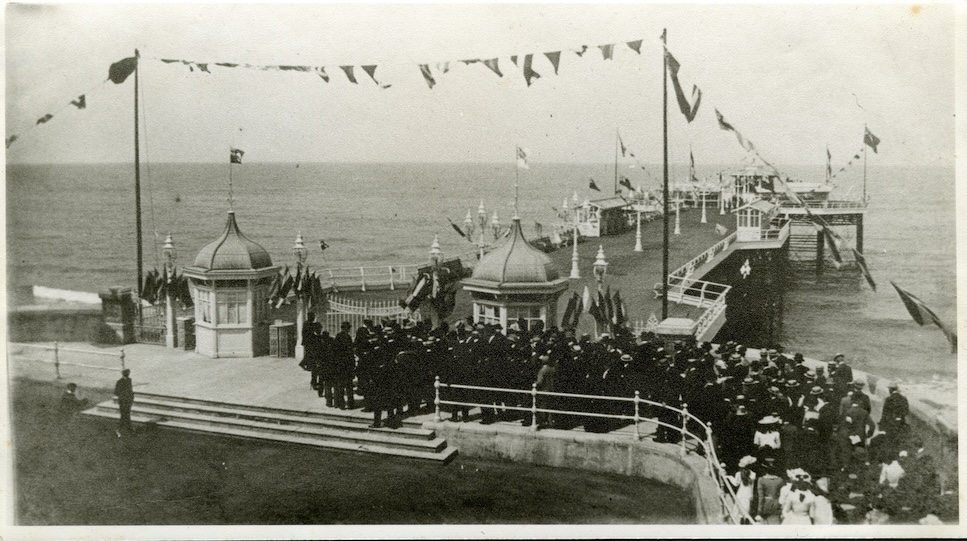
Both Cromer and neighbouring Overstrand became holiday hotspots after the writer Clement Scott wrote about it as ‘Poppyland’, trumpeting its delights. Famous visitors included Queen Alexandra, Lady Randolph Churchill (with her son Winston), the poet Lord Tennyson, playwright Oscar Wilde, the author of Peter Pan J. M. Barrie. Arts and Crafts architect Sir Edwin Lutyens also came to design The Pleasaunce for Lord Battersea and Overstrand Hall for Lord Hillingdon.
More recently the pier attracted fame once again by taking a central role in the 2022 quirky documentary film Seaside Special made by Jens Meurer.